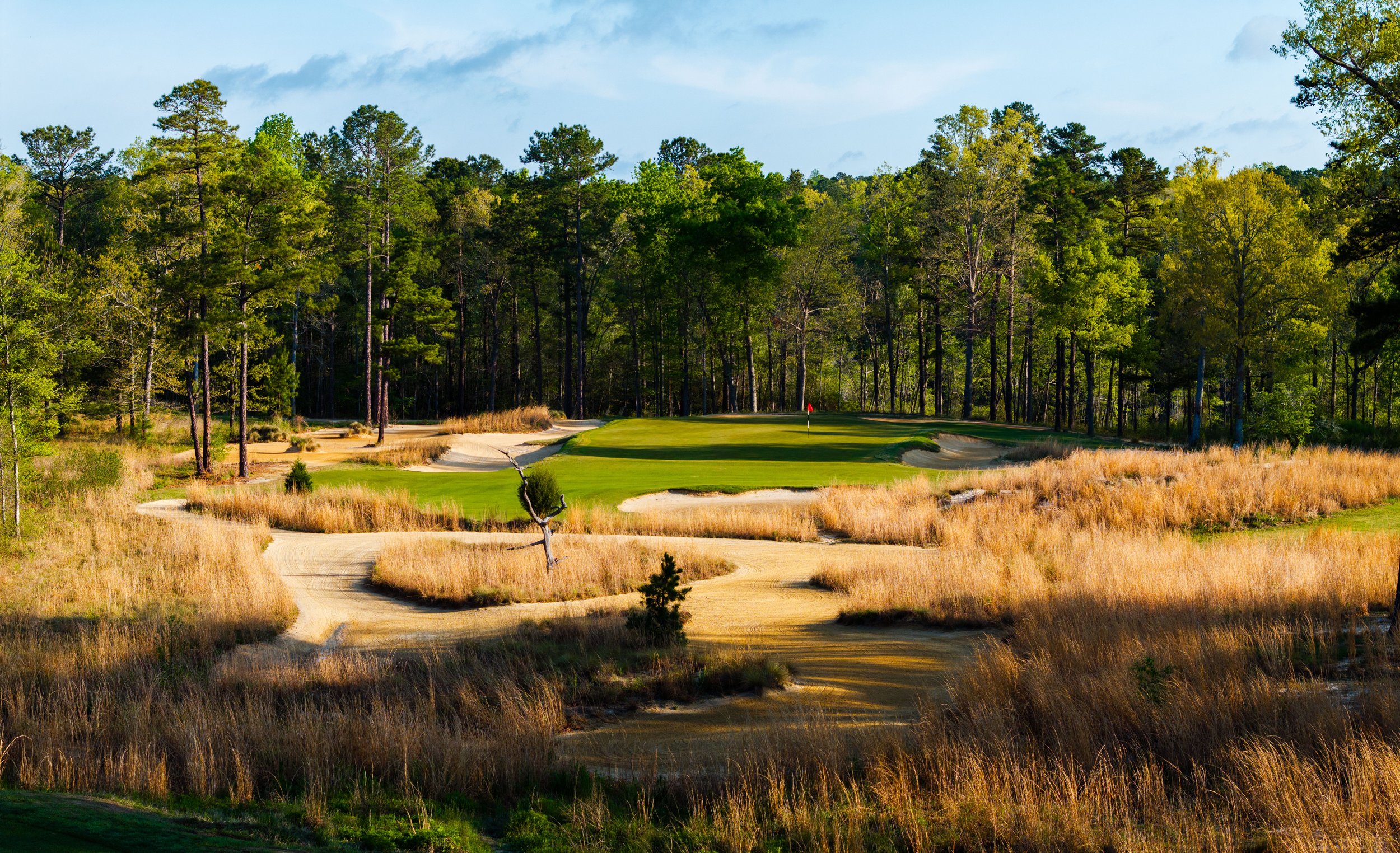
Dormie Club Hole #16
Key Takeaways:
The Challenge: Plant-parasitic nematodes represent an invisible biological crisis for golf course superintendents. At Dormie Club, lance nematode populations exploded to an astronomical 18,000 per sample—drastically exceeding the standard action threshold of 600–750, threatening the club’s elite bentgrass greens in the sandy soils of the North Carolina Sandhills.
The Partnership: Dormie Club Director of Agronomy Eric Harbauer joined forces with Dr. Lane Tredway, Technical Services Manager for Turf at Syngenta, on a multi-year field research trial evaluating breakthrough TYMIRIUM® technology.
The Breakthrough: The trial delivered fast improvements in plant health and stress tolerance, and controlled lance nematodes where older chemistries had fallen short.
Industry Impact: Research conducted across Dormie Club directly generated vital efficacy data contributing to federal EPA registration and the commercial release of Trefinti® nematicide/fungicide.
How Dormie Club Partnered with Syngenta to Bring Trefinti® to Market
Dormie Club, a Dormie Network property located in West End, North Carolina, is a links-style course designed by Coore & Crenshaw. As part of the Dormie Network portfolio, the club adheres to uncompromising agronomic standards to deliver an immaculate, pure playing experience for its members and their guests.
However, beneath these manicured green horizons lies an underground biological threat capable of destroying putting surfaces: plant-parasitic nematodes.
To fight this pest infestation that worries superintendents nationwide, Dormie Club Director of Agronomy Eric Harbauer partnered with Dr. Lane Tredway, Technical Services Manager for Turf at Syngenta. Together, they embarked on three years of ground-breaking field research testing TYMIRIUM® technology.
Their collaborative trial not only rescued Dormie Club’s greens from staggering pest populations, but it helped to pave the way for the commercial launch of Trefinti® nematicide/fungicide, a revolutionary product now transforming turf management across the entire golf industry.
Understanding Nematodes and Why They Thrive in the North Carolina Sandhills
Nematodes are microscopic roundworms residing in soil ecosystems, and there are millions of species. Many are harmless or even helpful, breaking down organic matter and cycling nutrients. Plant-parasitic nematodes are the exception: they feed aggressively on turfgrass roots.
Among the parasitic species, lance nematodes are the toughest opponent, and they are also the most prevalent species at Dormie Club. Nematodes depend on pore space and thin films of soil moisture to move and reproduce. They struggle to migrate through dense clay soils, but thrive in loose, well-aerated media. That makes the North Carolina Sandhills, with their deep sandy profiles and high-drainage greens, close to ideal habitat.
However, no course is entirely immune. “While light sandy soils have historically been conducive to nematode issues, nematodes can be found in all soil types,” said Tredway. “Lance nematodes are some of the most difficult nematodes to control that we deal with in turf.”
The Life Cycle of Nematodes
Understanding the life cycle of the nematode is essential for effective timing and chemical delivery:
Fall: Nematodes hatch and begin feeding on bentgrass roots. As roots are damaged and the plant pushes out new ones, populations build.
Spring: As soils warm, nematodes become active, typically around May. Warmth and soil moisture speed them up.
Summer: Populations peak in mid-summer. Humid rainfall followed by cool nights can accelerate activity, just as bentgrass faces its heaviest heat and moisture stress.
Why Nematodes Are a Threat to Golf Course Turf
Unlike foliar blights or visible leaf surface diseases, nematode damage often goes unnoticed until extensive root loss has already occurred.
“Nematodes are often overlooked as pests in turfgrasses,” says Tredway.
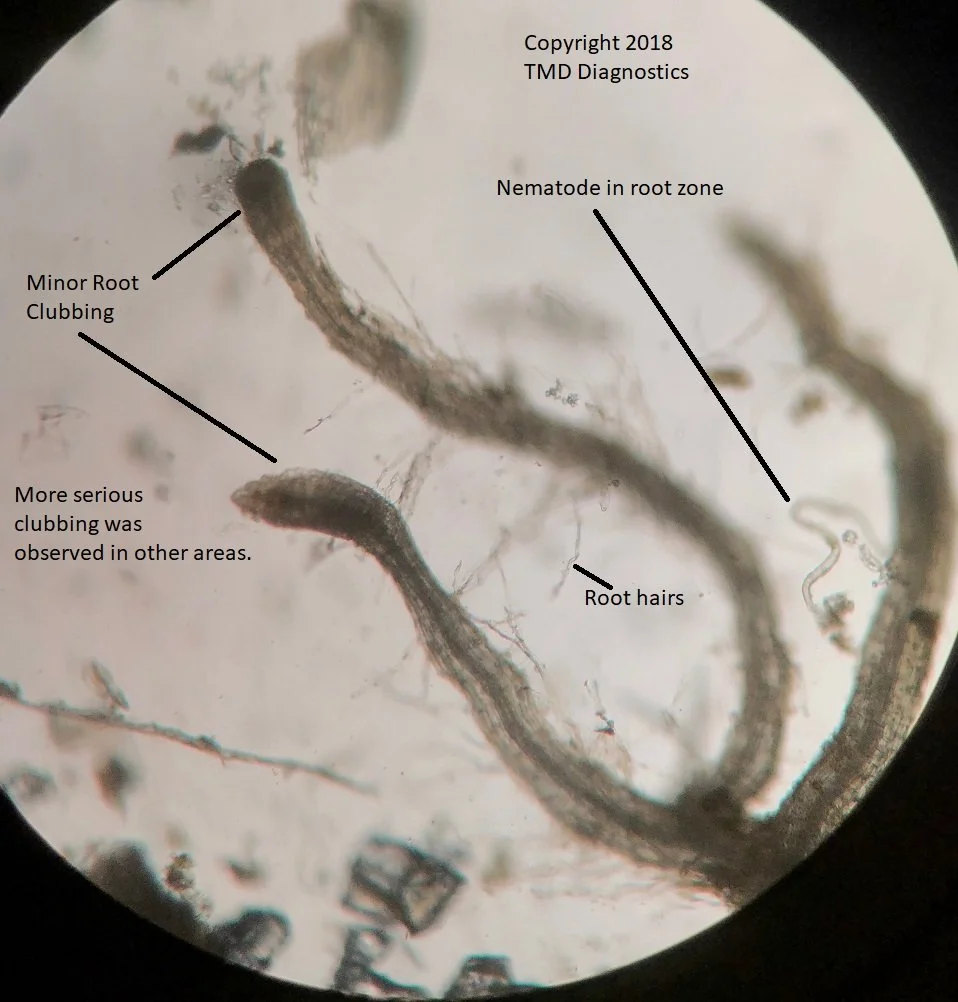
Nematode feeding can cause root clubbing, which cuts the plant's ability to take up water and nutrients. Harbauer compares this physiological damage to a severe traffic jam: everything the plant requires—water, nitrogen, potassium, and micronutrients get stuck on the road, unable to reach the roots.
Furthermore, physical destruction of root cells disrupts vascular tissues and creates open wounds that serve as primary infection points for opportunistic fungal root pathogens.
In a 2021 report for Golf Course Management (GCM), Dr. William T. Crow highlighted the industry-wide challenge: “Concern about lance nematode has been increasing among golf course superintendents, particularly as some of our newer nematicides can provide good results on the other two major kinds of nematodes, but not lance."
The Research Trial of Trefinti® at Dormie Club
Syngenta, a global agribusiness company, had been investing in the problem for years.
With dense, concentrated lance nematode populations, Dormie Club, was an ideal real-world proving ground for next-generation chemistry.
“Over the past decade, we have conducted extensive testing to address this growing issue for turfgrass managers. The sustained R&D investment has led to Trefinti®, a groundbreaking solution for controlling elusive, damaging nematodes that also offers powerful control of root diseases,” says Tredway.
For three years of that effort, Harbauer worked side by side with Tredway to test Trefinti® at Dormie Club.
They began small, treating control areas in the nursery like the 20th green, then expanded to greens across the property. Harbauer counts the 16th green among the top three nematode hot spots on the course. It is also one of the most iconic holes on the course, thanks to its photogenic ghost tree.
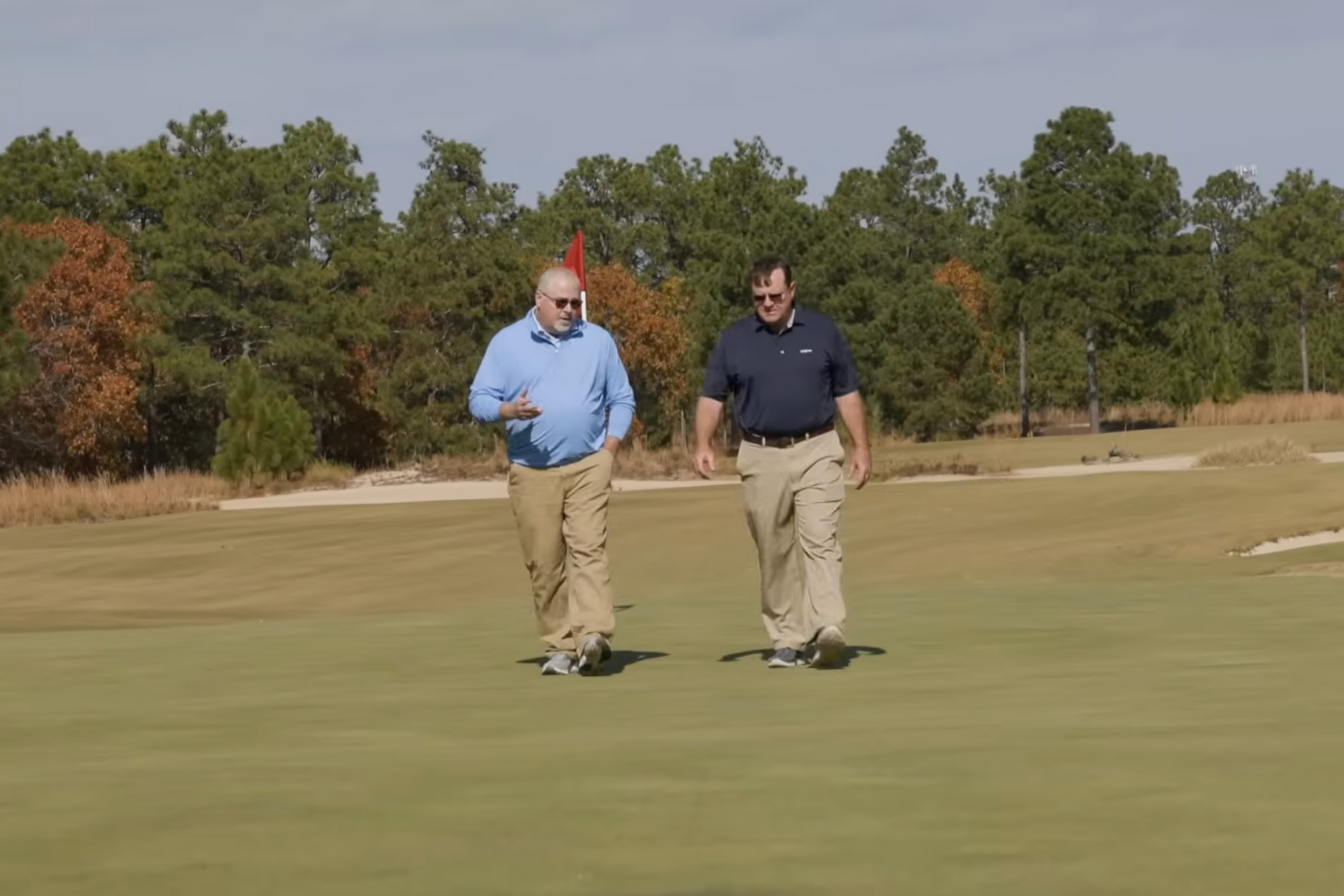
Dormie Club Director of Agronomy Eric Harbauer (left) with Dr. Lane Tredway, Technical Services Manager for Turf at Syngenta (right) at Dormie Club
Application of Trefinti® to Dormie Club’s Course
Application timing varied by turf species, nematodes, and diseases present. Harbauer first did some diagnostic sampling in the spring by collecting soil cores across the course to map nematode hot spots and set baseline counts.
From May through August, monthly solid or ninja tines opened micro-channels through the canopy before application, creating direct pathways into the soil. A soil wetting agent was mixed in to break surface tension and move product evenly through hydrophobic sand. Irrigation was split into two cycles of 0.15 inches, for a total of 0.30 inches, pushing the active ingredient into the feeding zone without washing it past the roots or causing runoff.
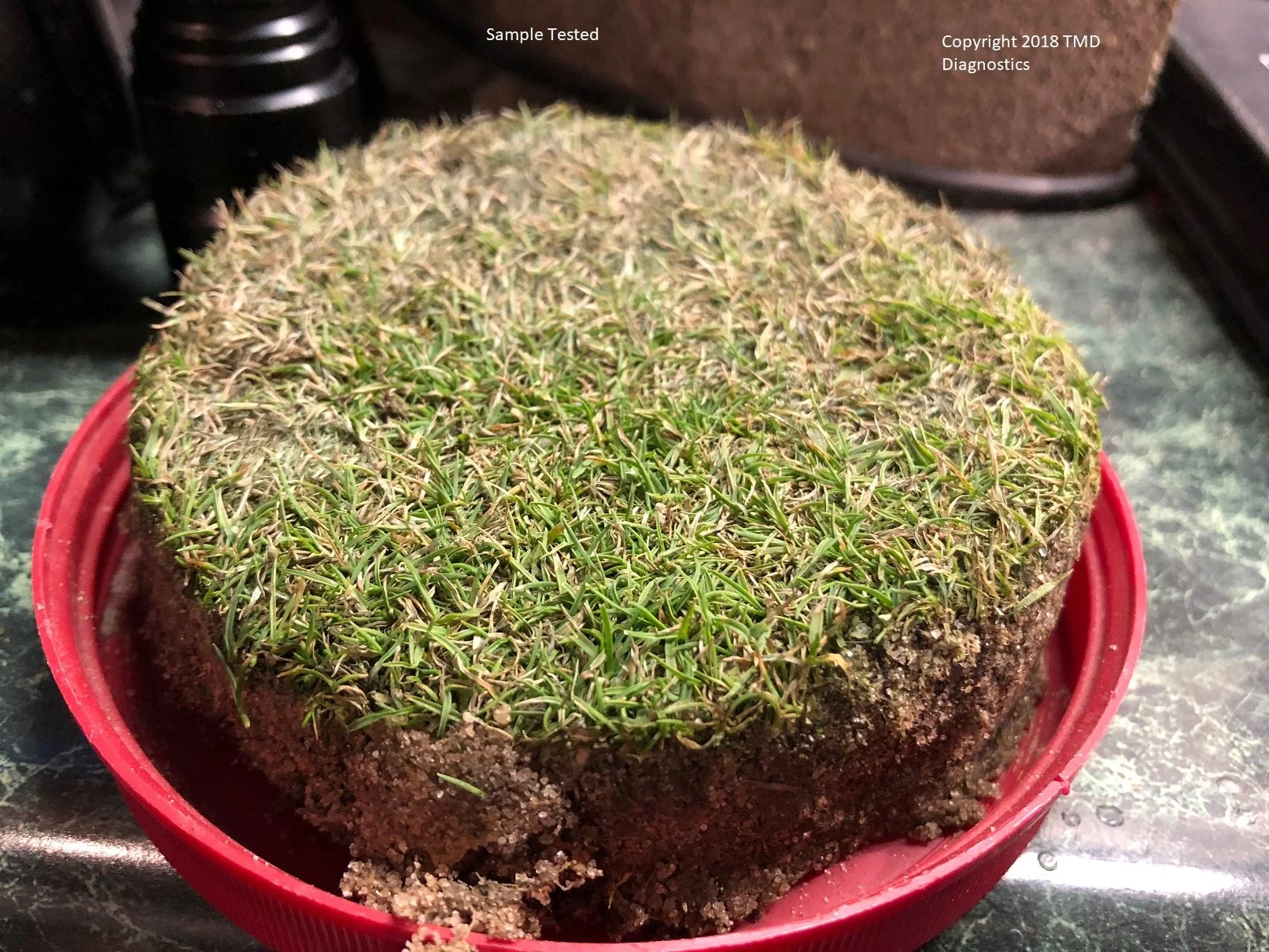
Soil sample
Resistance Management: Chemical Rotation Strategy
To enhance nematode control and reduce the risk of resistance, Syngenta recommends rotating Trefinti® and Divanem® nematicide, particularly in areas with high nematode populations or substantial damage.
“Divanem® is a valuable tool for resistance management. We are starting to see cases of resistance, nematicide resistance popping up in sting and root knot populations. And so we do need to use the SDHI chemistries judiciously as part of a program, and Divanem® is a perfect rotational partner that belongs to a different class of chemistry,” says Tredway.
A rotation with Divanem® provides broader-spectrum control of key nematode species, including spiral and stubby root, as well as resistance management for sting and root-knot species. Trefinti® can also be applied as a broadcast spray or spot treatment.
“The biggest benefits I anticipate seeing from using Divanem® and Trefinti® combined in a program are going to be better rooting, overall improved plant health, better turf density, firmer, drier conditions, and overall improved plant conditions and a lot less stress on me and my staff,” says Harbauer.
Results from the Research Trial of Trefinti® at Dormie Club
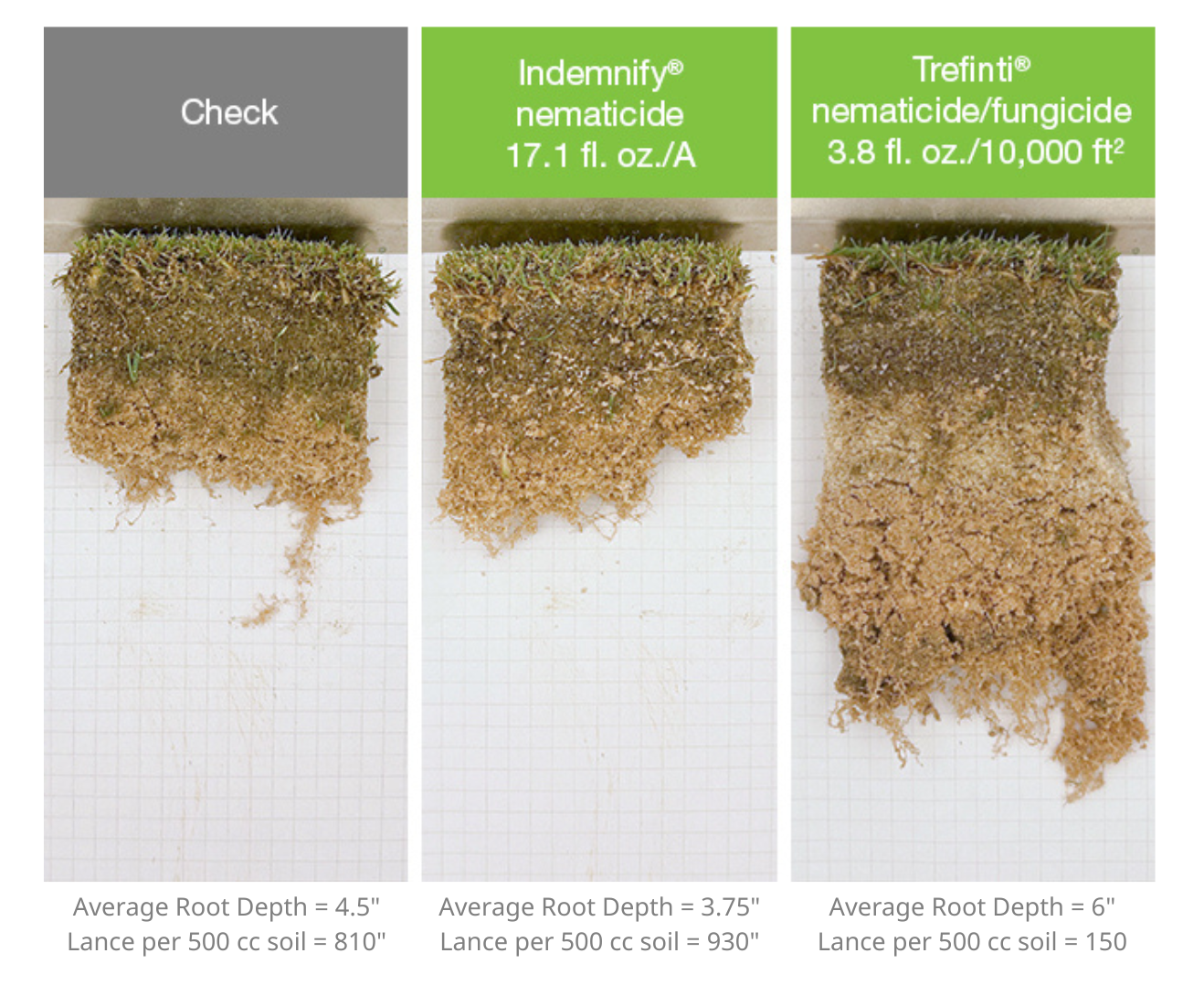
Source: Dormie Club, West End, North Carolina. ‘Penn A-1/A-4’ creeping bentgrass putting greens. Treatments applied June 5, July 3, Sept. 23 and Oct. 21, 2024, and April 3 and April 30, 2025. Watered-in immediately with 1/8” of irrigation. Photos taken June 24, 2025.
While reducing microscopic soil populations takes time, the physiological response of the turfgrass canopy was almost immediate after the application of Trefinti®.
“I think the thing that impressed me the most about the trials we did here with Trefinti® was the immediate response in the plant health,” reflects Harbauer. “Almost immediately, the plants would stop wilting, improve health, and improve as long as you get it out in the spring early enough before you have damage. Your counts take a little time to go down, but your plant response is right away.”
Trefinti® has significantly reduced nematode populations at Dormie Club, and some of the most heavily affected greens have turned into the best greens on the course. “We were running anywhere from 10,000 to 18,000 lance nematode counts on our property and then this year were sub-400. So it's been a huge difference,” says Harbauer.
For perspective, a count of 600 to 750 is the generally accepted threshold. Below it, the turf tolerates the pressure. Above it, treatment is needed. Counts in the tens of thousands were an existential threat to the putting surfaces.
“Trefinti® has performed very well against lance nematodes, especially at the spot treatment rate of 3.8 fluid ounces per 10,000 square feet, and with repeat applications of Trefinti® at the spot treatment rate, we've been able to bring lance nematode populations down below threshold levels in a number of trials,” says Treadway.
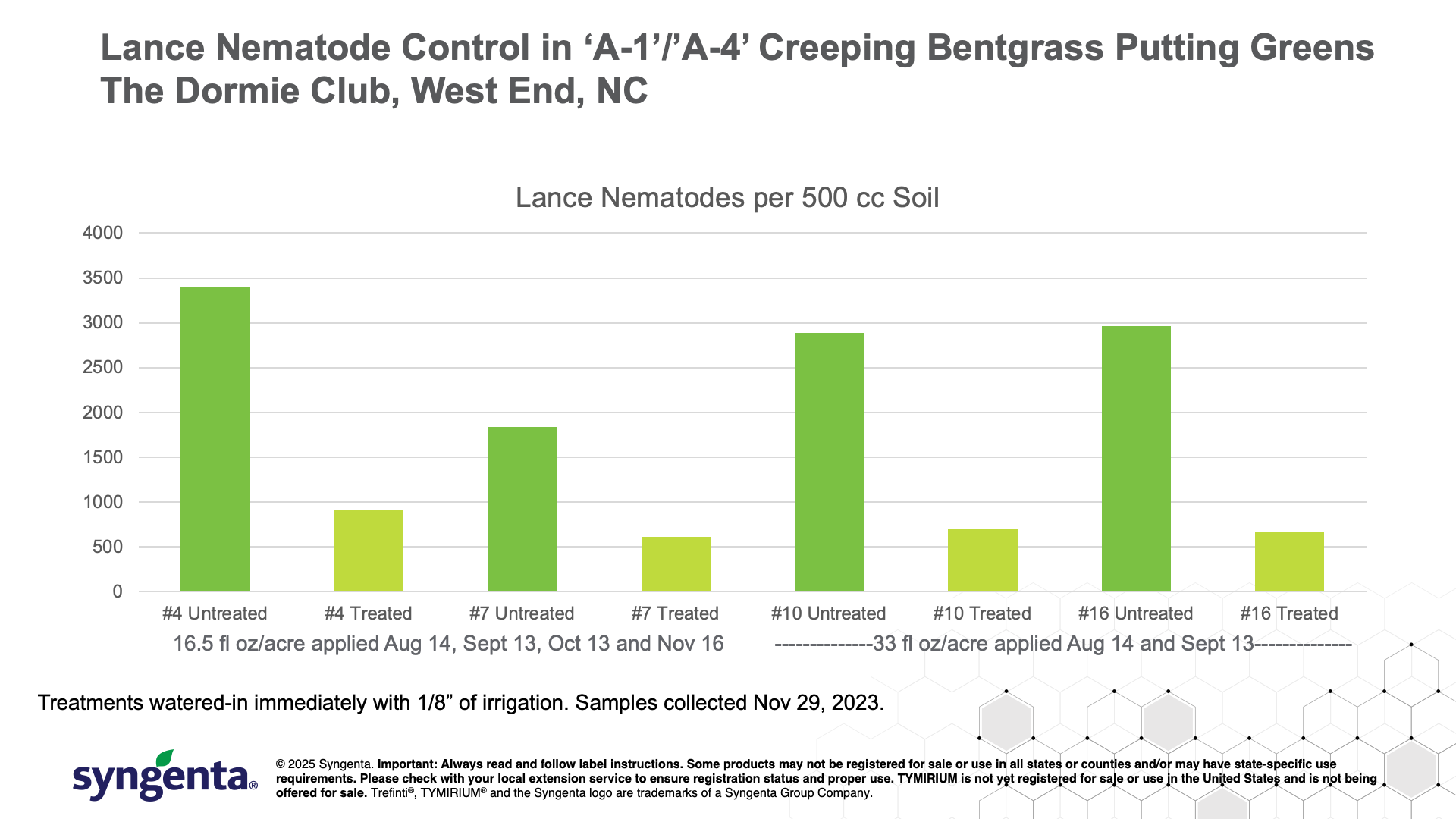
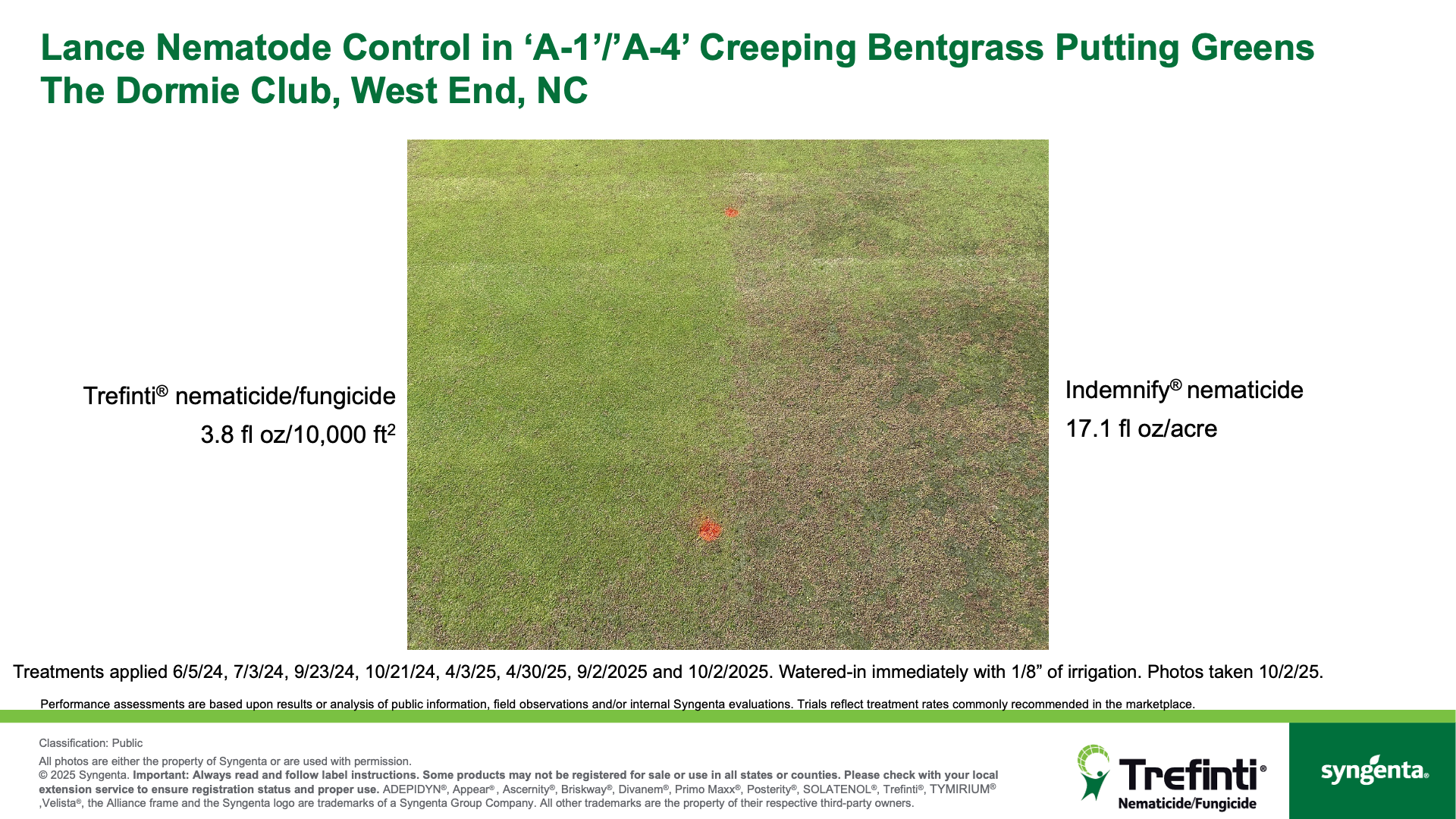

Data from samples sent to N.C. Department of Agriculture and Consumer Services
Additional Benefits of Trefinti®
Trefinti® has a symbiotic relationship that helps with other diseases and plant health. Beyond suppressing lance nematodes, Trefinti® nematicide/fungicide provides broad-spectrum control against sting, root-knot, and Anguina nematodes. Additionally, its dual-action formulation helps suppress destructive soilborne diseases like spring dead spot and mini ring—fostering deeper root development, enhanced stress tolerance, and overall turfgrass health.
Flexible dosing allows agronomists to utilize tailored broadcast rates across broad fairway acreage or target concentrated spot treatment rates on putting greens based on localized environmental stress and budget parameters.
Targeting both pests and soilborne fungi with a single application minimizes labor, reduces wear from equipment passes, and limits overall chemical output—aligning with sustainable agronomic practices.
Industry-Wide Impact: Bringing Trefinti® to Market
“Trefinti® delivers what superintendents have been asking for—broader-spectrum nematode control including lance, plus the added benefit of soilborne disease protection in one solution,” said Stephanie Schwenke, turf market manager at Syngenta.
The rigorous testing conducted on Dormie Club's greens provided vital real-world efficacy data that helped bring this solution to market.
Today, superintendents across the country rely on Trefinti® to manage complex soil complexes. Within the Dormie Network family, sister properties like Briggs Ranch Golf Club in San Antonio, Texas, utilize the chemical.
While Trefinti® is a significant investment, the dual-action efficiency yields significant operational return. "The ability to manage both nematodes and fungal diseases with a single product, in a single application, really provides great value to golf course superintendents," emphasizes Dr. Lane Tredway, Technical Services Manager for Turf at Syngenta.
About Syngenta
Syngenta continues to be a global leader in agricultural innovation with a presence in more than 100 countries. Syngenta Professional Solutions is focused on developing tomorrow’s technologies and practices that empower customers today to protect and enhance the places where people live, work and play, all while preserving our planet. Its bold scientific discoveries deliver better benefits for customers and society on a bigger scale than ever before. Guided by its Sustainability Priorities, Syngenta is developing new technologies and investing in digital solutions that help customers maintain beautiful landscapes and keep public spaces healthy. Syngenta Crop Protection is headquartered in Basel, Switzerland; Syngenta Seeds is headquartered in the United States. Follow us on, YouTube & X.
Discover more at GreenCastOnline.com/Trefinti © 2026 Syngenta. Important: Always read and follow label instructions. Some products may not be registered for sale or use in all states or counties and/or may have state-specific use requirements. Please check with your local extension service to ensure registration and proper use. Divanem is a Restricted Use Pesticide. Divanem®, GreenCast®, Trefinti®, TYMIRIUM® and the Syngenta logo are trademarks of a Syngenta Group Company.


