The Essential Guide to Playing Dormie Network’s Golf Courses
Members of Dormie Network have access to not just one golf course—they unlock seven remarkable courses located in America’s most compelling golf landscapes. From the Midwest to the Northeast, each course offers a distinct playing experience. Together, they form a tapestry of courses—each unique, yet united by a single promise: pure, unfiltered golf at its finest.
Dormie Network golf courses emphasize playability, with multiple tee boxes ensuring that players of all skill levels can enjoy the game exactly as it was meant to be played. In this guide, discover more about the playing experience at each bucket-list destination.
“Our portfolio of clubs offers seven extremely unique golf experiences from an architectural and playability perspective. Our extremely talented agronomic professional teams provide course conditioning expected at top-tier clubs. All of this leads to unforgettable rounds and often a desire for an emergency nine.”
- Dormie Network Chief Operating Officer and PGA member, Mark Ruhga
| ArborLinks | Ballyhack | Briggs Ranch | Dormie Club | GrayBull | Hidden Creek | Victoria National | |
|---|---|---|---|---|---|---|---|
| Location | |||||||
| Location |
|
|
|
|
|
|
|
| Architect | |||||||
| Architect |
|
|
|
|
|
|
|
| Year Built | |||||||
| Year Built |
|
|
|
|
|
|
|
| Par | |||||||
| Par |
|
|
|
|
|
|
|
| Length (yds) | |||||||
| Length (yds) |
|
|
|
|
|
|
|
| Rating | |||||||
| Rating |
|
|
|
|
|
|
|
| Slope | |||||||
| Slope |
|
|
|
|
|
|
|
| Greens | |||||||
| Greens |
|
|
|
|
|
|
|
| Fairways | |||||||
| Fairways |
|
|
|
|
|
|
|
| Tees | |||||||
| Tees |
|
|
|
|
|
|
|
Scroll left-right to view the full table
The Dormie Network Course Collection
Dormie Network's seven courses span three architectural styles, each offering unique challenges and aesthetic experiences.
Links Style Courses
Links golf is defined by its ground-hugging design, rolling terrain, and natural dunes, often with few or no trees. Therefore, wind is common, and accuracy is required, with smaller, deep pot bunkers shaping the round.
ArborLinks
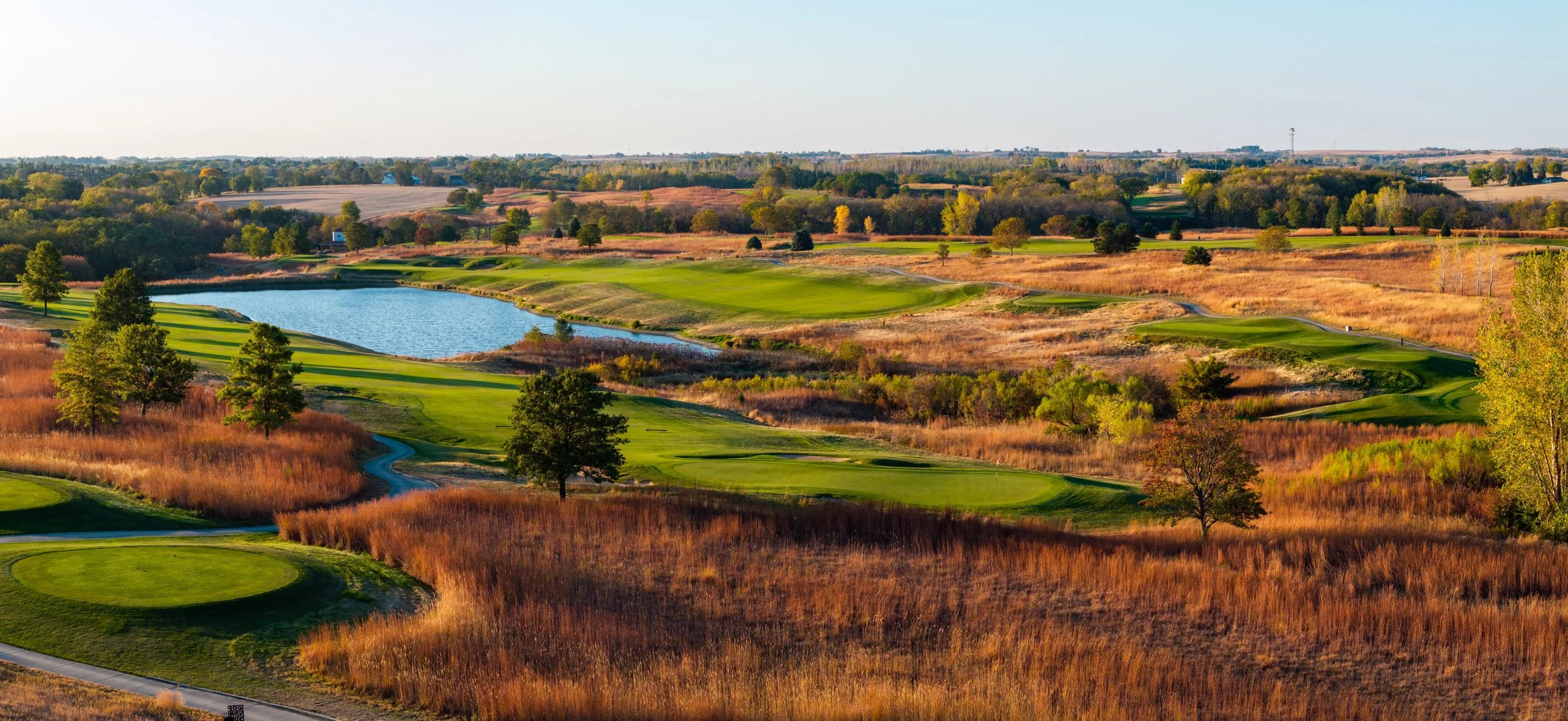
Stretching across the Nebraska prairie, ArborLinks is a top Arnold Palmer design embodying inland links philosophy. The course unfolds in Nebraska City amid the countryside with tall native grasses, meandering creeks, and sweeping views. The farmland aesthetic is unmistakable—gravel roads in the distance, and the iconic finishing green sits beside Table Creek and a drive-through silo, a nod to the region’s agricultural heritage.
Rooted in an “Old World” sensibility, the course layout is not overly long but demands precision and intention. Greens are framed by gouged-out bunkers and seemingly insurmountable native rough, making accuracy off the tee paramount. Fairways narrow in key places, and blind shots add a thrilling element of uncertainty.
Ruhga shares, “ArborLinks provides tremendous shot variety throughout the round, and the wind is often a major factor. While there are numerous opportunities to choose high risk, high reward shots, a conservative approach will frequently lead to better scores at the end of the day.”
Near the 4th and 13th tees and after the 7th green, a comfort station awaits. Practice facilities include a driving range and dedicated short game and putting areas, while the Northwoods Complex features a private putting green for friendly competition or sharpening your game.
Set in the heart of the Midwest, the climate at ArborLinks is known to bring drama. Summer days can be beautifully hot, while early spring and late fall may carry a welcoming chill. Temperatures can shift surprisingly day to day, but the golf shop keeps you covered with whatever gear you need to stay comfortable. Storm systems occasionally roll across the plains, delivering striking skies.
Those same skies light some of the longest days golf has to offer. ArborLinks welcomes the season in early April, but by June and July, the club finds another rhythm. The sun lingers deep into the evening, turning the prairie gold and inviting members out for rare, unhurried loops after dinner.
GrayBull Club
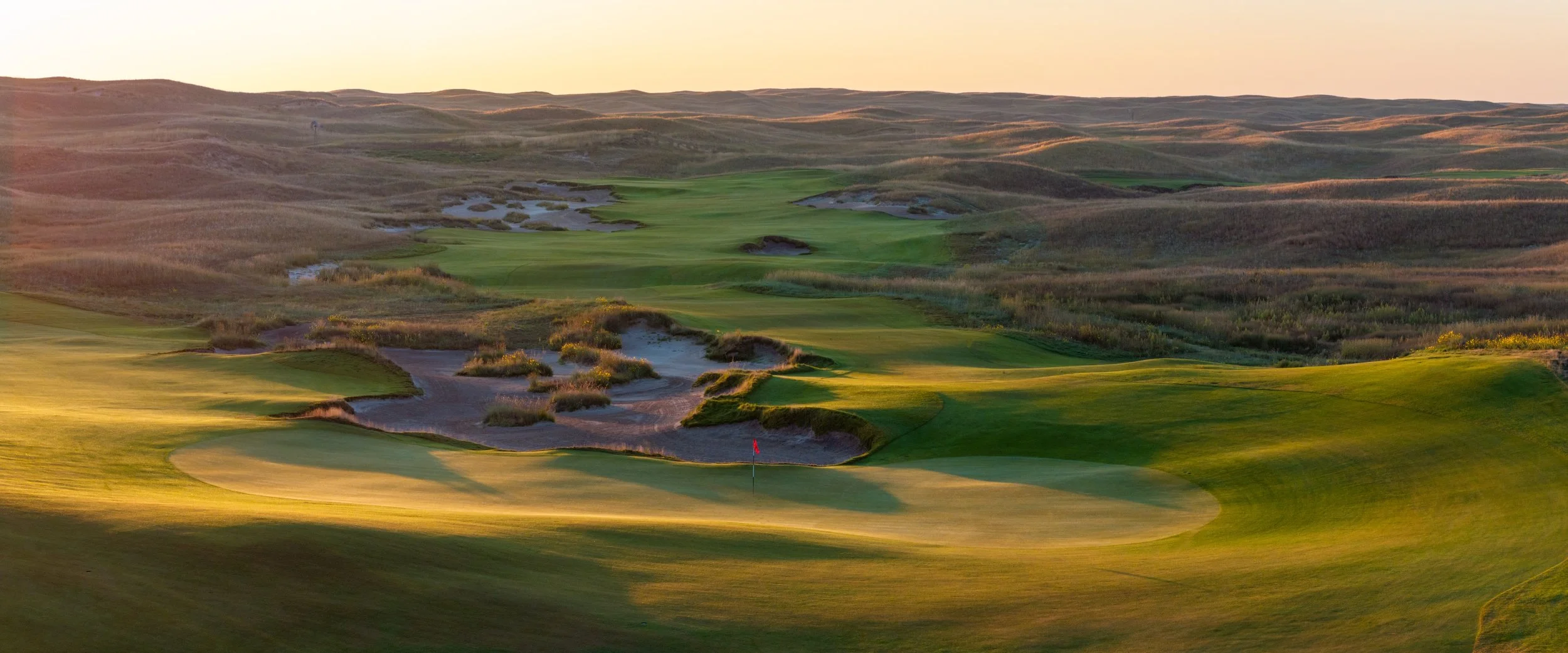
The newest addition to the Dormie Network, GrayBull Club opened in 2024 as a pure expression of Sandhills golf. Designed by David McLay Kidd (DMK), the layout may be the most visually striking departure within the Network’s portfolio. Set among the highs and lows of the Nebraska Sandhills. Trees are scarce (one onsite to be exact), shade is minimal, and the horizon feels limitless. “It’s this deep, silty sand that grows tight, firm turf across rolling sand hills,” describes McLay Kidd.
“What McLay Kidd has created at GrayBull is an incredible inland links-style layout on a massive canvas, with angles and avenues that encourage golfers to think their way through like a chess match,” says Erik Matuszewski of Forbes.
The design places playability at the forefront of the massive, untamed canvas. The scale invites boldness, yet the architecture asks for thought. The routing moves in a clockwise sweep, with only occasional cascading switchbacks.
Without cart paths, players stay immersed in the landscape from the first tee to the 18th green. GrayBull is very walkable, and members can complete the routing on foot without stepping onto native grass. Since the majority of members ride in carts, strips of durable turf were extended from the putting surfaces. “The way the holes are strung together also gives the course a more polished appearance than its peers,” says Derek Duncan of Golf Digest.
The landscape creates dynamic, multidimensional golf. Large at first glance, the fairways are subtly hidden by sand dunes and raised bunkers. The par-4s are a highlight, with a vast variety of lengths and layouts.
“GrayBull’s bunkers were built with more intention, many of them deliberately crafted waste areas with tufted islands of fescue,” says Derek Duncan of Golf Digest. Run-off areas test your short-game while still offering a realistic chance at bogey—or even par—if you miss the green.
A comfort station is conveniently located between holes 3 & 4 and 9 & 10, while a vintage yellow pickup on 14 hides YETI coolers stocked with beverages. Practice facilities include a driving range and a short game area.
Situated four hours west of ArborLinks, GrayBull experiences similar Midwestern weather—but drier, slightly higher in elevation, and often a touch cooler. For that reason, the club opens in early May, just after its sister property, ArborLinks. In the height of summer, daylight stretches well into the evening, casting spectacular light across the dunes and inviting lingering rounds that feel suspended in time (yes, even longer sunlight than ArborLinks). Wind is a familiar companion here, shaping decisions and adding a dynamic element to every shot.
Victoria National
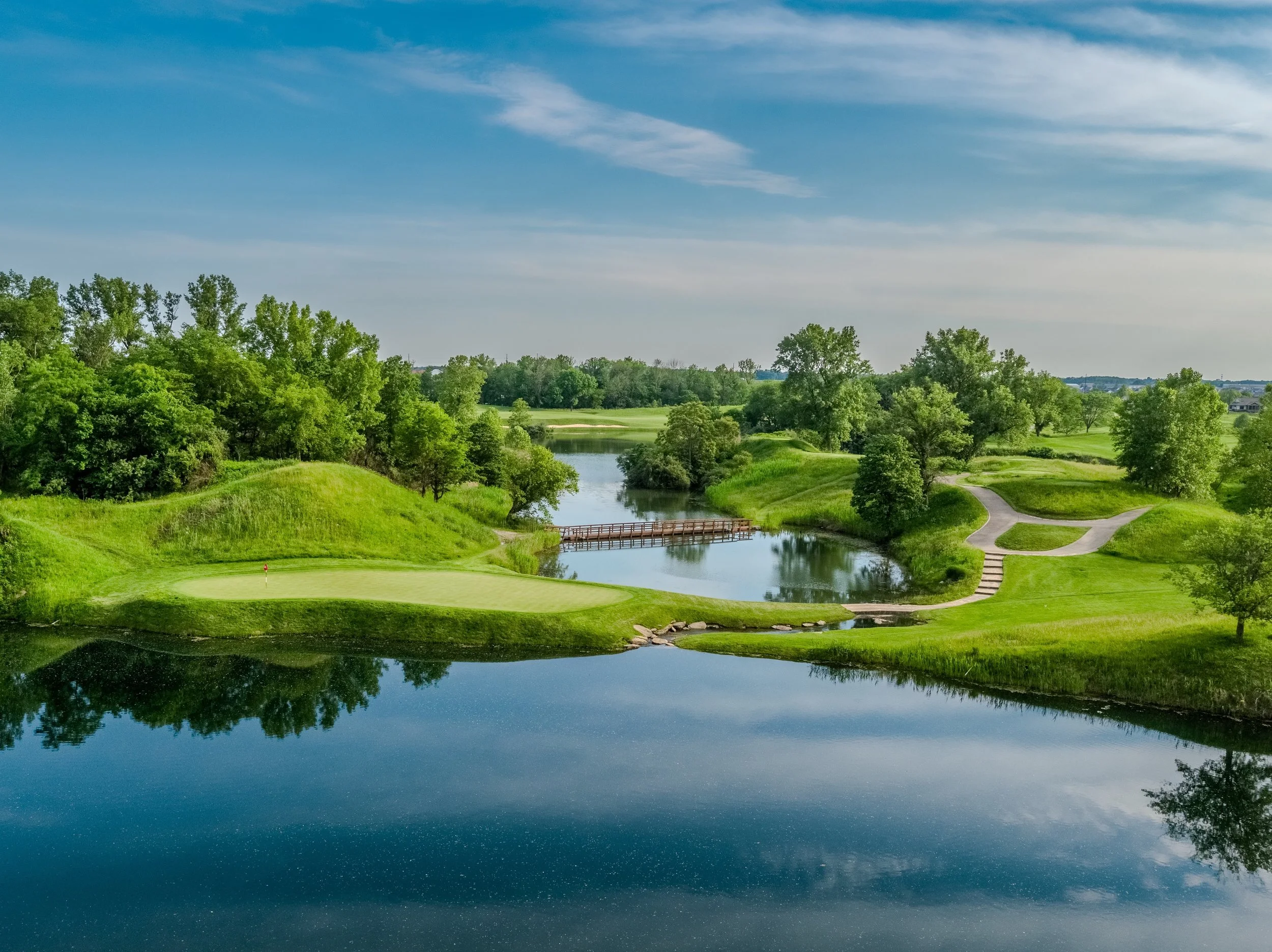
Tom Fazio’s design at Victoria National is the #1 course in Indiana. Trees frame expansive corridors of play, while deep freshwater lakes and sweeping bridges shape a landscape that feels both rugged and refined. Built on the site of a former coal mine, the property carries a subtle industrial character—its aggressive landforms and reclaimed terrain giving the course a bold, muscular presence. Native grasses and open vistas lend the feel of a prairie preserve, with each hole tying seamlessly into the natural contours of the land. It’s an experience visually striking at every turn.
Victoria National is considered the most formidable test within Dormie Network. But there is no hidden trickery here; the challenge is clearly revealed. Landing areas from the tee are often generous, but accuracy remains essential. Miss the proper line and the penalties are severe, whether in hazard or thick fescue that rarely gives a ball back easily (you will want to bring some extra balls).
“Victoria National can be extremely challenging, but allowing the golf professional staff to help you select the proper tee box can certainly make it a bit more user friendly,” says Ruhga. “Throughout the round, the course provides so many stunning views and creates opportunities for the most memorable shots in a golfer’s career.”
Each hole is thoughtfully positioned to make full use of the property’s elevation shifts and prevailing winds. Fazio leaned into the land’s mining history, shaping fairways through natural corridors carved decades ago and along expansive lagoons created when excavation reached the water table.
Water influences every hole, serving as both a visual centerpiece and a strategic element. The par-3 fifth is especially iconic; its green fully guarded across the front by shimmering water.
A course rater for Golf Digest noted that the closing stretch from the 14th through 18th holes “will test a champion golfer’s mettle down the stretch.” Known as The Gauntlet, these five finishing holes are widely regarded as the course’s ultimate examination. The reputation is well earned, as Golf Digest consistently ranks Victoria National among America’s most challenging courses.
At the turn, slip downstairs to Café Vic on the clubhouse’s lower level before the back nine. After the 12th, the Turtle Shack awaits just beyond the cave. Practice facilities include a driving range and two dedicated short-game and putting areas.
The season at Victoria National begins in late March. Expect a true four-season climate—warm, humid summers; cool, wet winters; and lively, changeable conditions in spring and fall. Set in the southern edge of the Midwest, temperatures are generally milder than the Network’s Nebraska properties.
Ballyhack
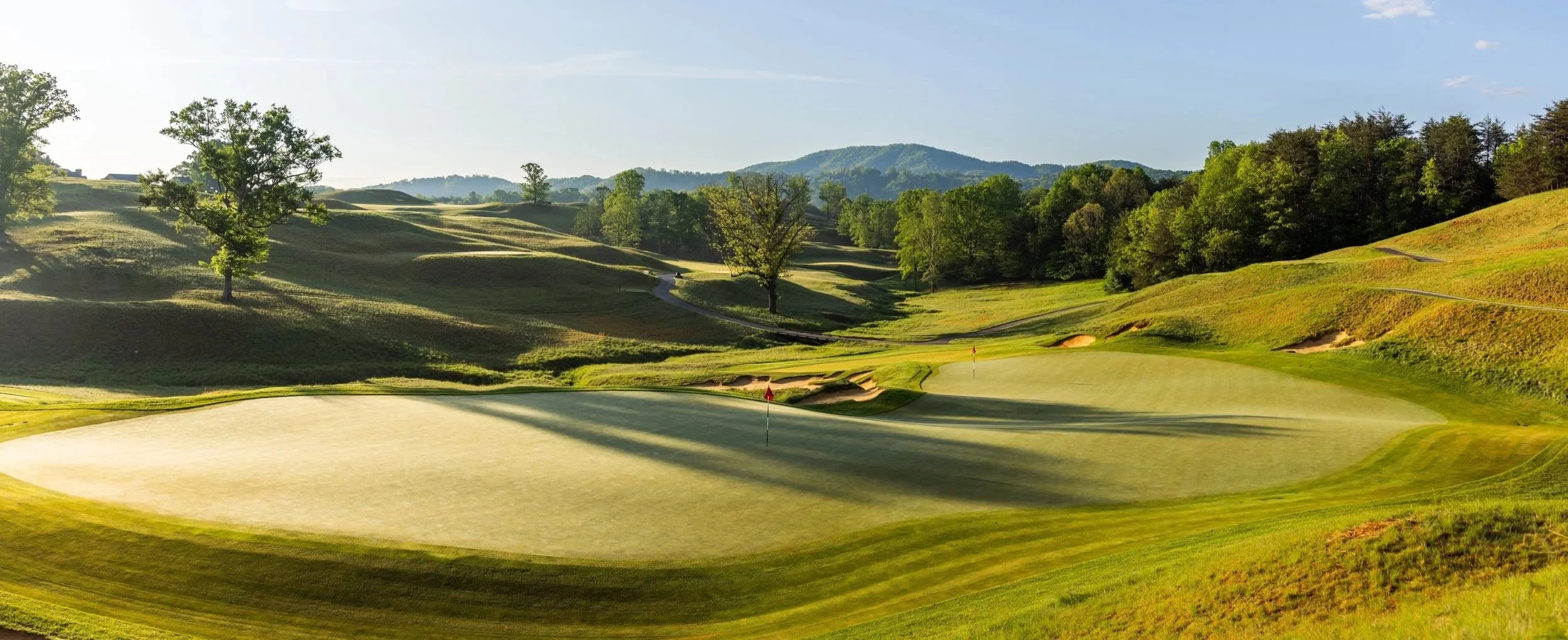
Ballyhack is Dormie Networks breathtaking mountain course in Roanoke designed by Lester George. The course is known for its topsy-turvy landscape that provides a high-contrast look. The groundskeeping African Boer goats are iconic. It is of little surprise that Ballyhack has been coined the Ballybunion of Southern Virginia.
Head Golf Professional Matt Bevan describes Ballyhack as “mountain golf with a very Inland links style in terms of optics and conditioning.” Set across tumbling land with ravines and brooks, the course is big, bouncy, and full of dramatic contrasts. Rather than forcing overly difficult holes, George gives the golfer a flat tee pad and the opportunity to navigate natural hazards like ravines and native roughs to break up the line of instinct. Making a decision from tee to green needs intentional action, as there are vast landing areas, joined fairways, center bunkers, and double greens. Dormie Network ambassador Blair Wheeler said Ballyhack was one of the tightest courses he has played.
George emphasizes “By giving up on a walking course, we saved about five wonderful holes that would have never been possible. The views we captured by doing that are one of the reasons people love the place. Ballyhack has been singled out as one of only five golf courses in North America by the USGA that is truly ‘FIRM and FAST.’ This is a philosophy as well as an agronomic practice. I am pleased that we are one of the first courses in the country to capture a realistic links ‘feel’ by designing so many unique and different approaches to the holes that the ground game is a real option, not just an advertisement.”
Ballyhack features a driving range and putting green. Blair Wheeler says the range is “one of the coolest I’ve ever hit on”, with its downhill slope. The club also has the Goat Trak—a par-3 course with varied yardages and unique angles into the greens. It offers a different experience from the 18-hole layout that’s ideal for late arrivals or groups short on time. The clubhouse is conveniently located for members to stop mid round.
Ballyhack never truly closes for the winter, though snow can grace the course in colder months, while summers bring the full warmth of southern Virginia. A windy day is most days at Ballyhack.
Dormie Club
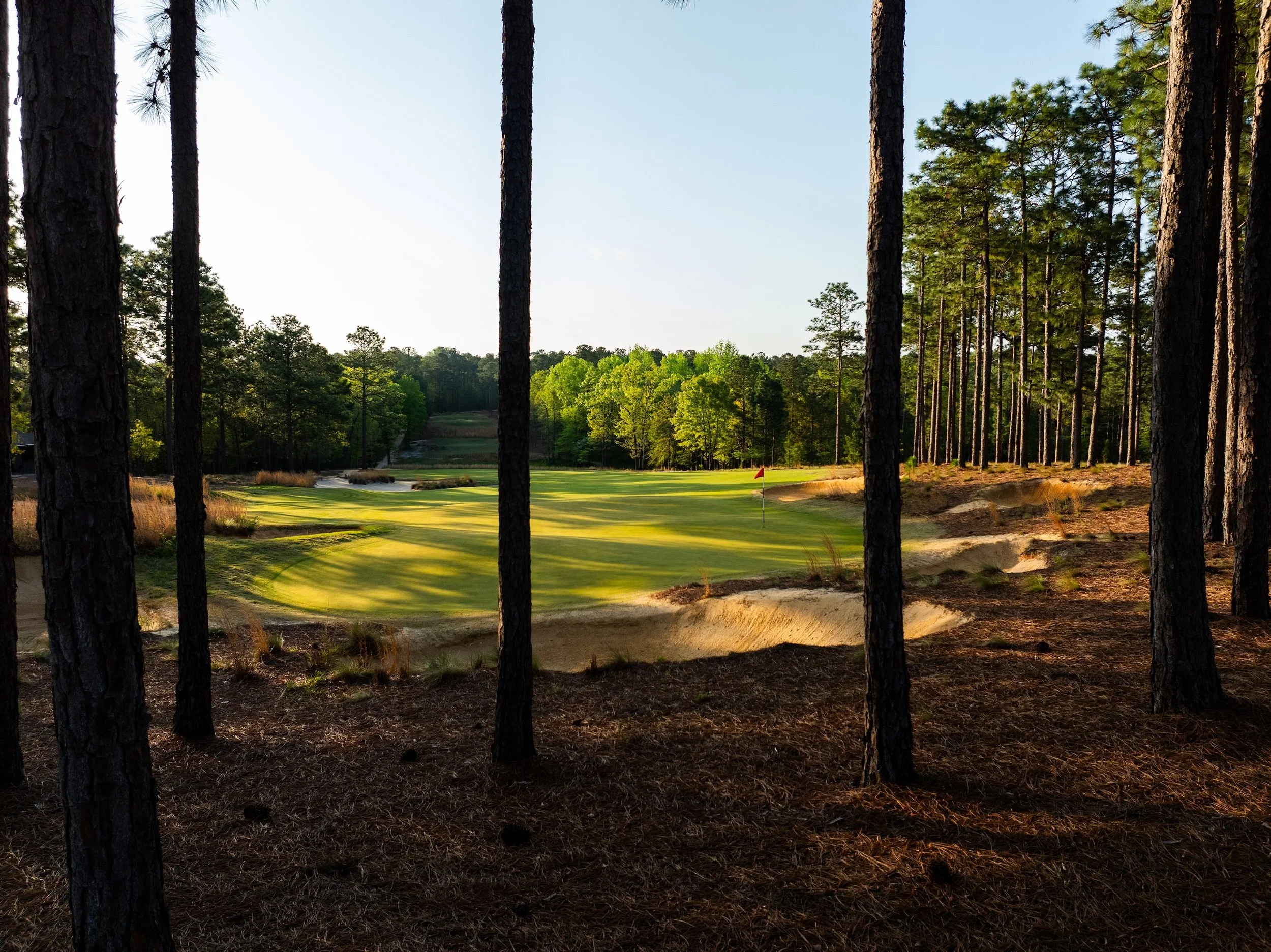
A classic Coore & Crenshaw design, Dormie Club carries a links-style spirit that winds gracefully through the woods. Towering longleaf pines frame each corridor of play, their canopies filtering soft Carolina light onto sandy, pine-needle floors below. The routing moves through rolling, hilly terrain, weaving past ponds.
True to Coore & Crenshaw’s meandering, open-minded philosophy, the land’s natural features guided every design decision. Keeping with the Sandhill region’s popular theme, there is little conventional rough; instead, sandy waste areas edge the fairways, pine straw beds, and native areas with grasses. You can plan to navigate plenty of sand. Sandy waste areas allow players to ground their club prior to taking a shot. The area’s unaltered, wooded beauty is reinforced with sand cart paths.
“For me, Dormie Club is one of the most serene golf courses I have experienced,” says Ruhga. “With several tee and approach shots perfectly framed by the Carolina pines, it truly makes you feel one with nature and the land. Dormie Club also offers many short game options, highlighted by putting from well off the green and allowing the contours to funnel your ball toward the hole.”
Generous fairways provide confidence from the tee, making this very much a player’s course and, at its heart, a second-shot examination. The true defense lies in the greens—signature Coore & Crenshaw surfaces with pronounced movement where precise approach angles and thoughtful placement are vital.
One Golf Digest course rater noted that the course “lives up to its reputation as a fun and challenging ‘bucket list’ layout that seamlessly blends with the North Carolina landscape,” highlighting unique touches like its reverse Redan par three.
The par-4 16th is iconic for the photogenic ghost tree in the center.
A comfort station is thoughtfully placed along the course, and practice facilities include a driving range along with putting areas.
Located approximately three hours south of Ballyhack, Dormie Club enjoys a moderate four-season climate. Summers are warm and humid, spring and fall are comfortably temperate, and winters are generally mild enough to avoid a hard seasonal closure—allowing for extended play throughout much of the year.
Parkland Style Courses
Parkland courses are inland layouts defined by lush turf, tree-lined fairways, and carefully formed features like bunkers and water hazards. Unlike rugged links, they offer soft, receptive surfaces that reward high-arching approach shots.

Briggs Ranch
Briggs Ranch is Tom Fazio design with breathtaking views of the rolling Texas Hill Country. The landscape is dotted with iconic honey mesquite trees, stately evergreen Texas live oaks, and wildflowers blooming in the spring.
Interestingly, Fazio designed the toughest (Vic) and friendliest (Briggs) courses in the Network. Briggs Ranch’s design is molded by the elevations of Texas Hill Country. Wide, undulating Zoysia fairways lead to well-protected greens featuring penal false fronts. Risk-taking is encouraged throughout the round, rewarding aggressive lines off the tee with scoring opportunities on multiple reachable par 5s and drivable par 4s. The greens at Briggs Ranch provide the course’s best defense, with firm and fast surfaces that often run away from players into deep collection areas or cleverly placed bunkers.
Bill Rogers, who assisted Fazio in creating the course, says “The bunkering is a tremendous highlight of the golf course and really sets it apart.”
“The golf course is huge in scale, and the green complexes and bunkering provide plenty of challenge,” adds Dormie Network Chief Operating Officer Mark Ruhga.
The club features a vintage truck transformed into a mobile “Truck Stop,” serving food and beverages—perfect for a mid-round break. Practice facilities include a driving range and a short game area and putting green. Don’t forget to say hello to Jack and Jose, the resident Texas longhorns—feel free to give them a treat and a friendly pat.
Briggs Ranch is the Network’s southernmost—and warmest—course. True to its Texas setting, summer temperatures can be intense, and the club typically closes from late June through August, reopening in early September. The ideal window to play is during the cooler months, from late fall through spring (November–May), when conditions are comfortable.
Heathland Style Courses
Heathland courses are inspired by the open, uncultivated landscapes of Britain, featuring heather, gorse, and natural grasses. Typically, more open than parkland, these inland layouts echo links-style design with gently rolling terrain, sandy soil, and a natural, less-manicured appearance.

Hidden Creek
Hidden Creek, like Dormie Club, is a Coore & Crenshaw design. The course is lined with majestic pitch pines and white and red oaks, creating a lush, forested landscape. What sets Hidden Creek apart is its remarkable sense of solitude, with holes naturally separated by lush vegetation and rolling terrain—you truly feel like the only golfer on the course. The views stand in sharp contrast to the wide-open vistas of GrayBull or ArborLinks.
"Hidden Creek looked like golf in its natural form in terms of rolling terrain and trees," says Bill Coore. "Since the fairways required minimal earth movement, it allowed us to emphasize details such as bunkers and the contouring of greens."
Coore & Crenshaw are known for their minimalist designs, featuring quiet undulation and ridges. Designed to resemble the heathland landscapes outside London, Hidden Creek’s soft, undulating dunes bridge the sport’s earliest coastal courses with the parkland courses of the U.S. The course sits in a rugged section of the Pine Barrens, characterized by pitch-pine-covered, sandy soil, plateaued fairways, and lulling greens. As with many Coore & Crenshaw designs, Hidden Creek offers wide fairways that emphasize finding the best angle to give yourself the best chance to score.
“The greens complexes here are also terrific and the bunkering with fescue is highly aesthetically pleasing. This is easily one of the best courses in Southern NJ and one I highly recommend,” says a Golf Digest course rater.
Amenities include a comfort station on course, driving range, putting and short game areas, and one of the onsite lodging houses even has its own putting area.
The Network’s Northeast club is particularly stunning in the fall, when the hardwoods explode in vibrant autumn colors, evoking a New England-like atmosphere. The course opens for the season in late March.
Experience Pure Golf with Dormie Network
Dormie Network is your go-to for pure golf experiences. Each course design is very well thought out and provides every player, no matter skill level, the chance to enjoy themselves.